Lock Changes in Redditch
Lock Changes for Redditch homes and businesses, carried out by DBS-checked local engineers with prices agreed before work begins.
- ✓ DBS-checked
- ✓ Fully insured
- ✓ Work guaranteed
- ✓ Local engineers
Introduction to Changing a Door Lock
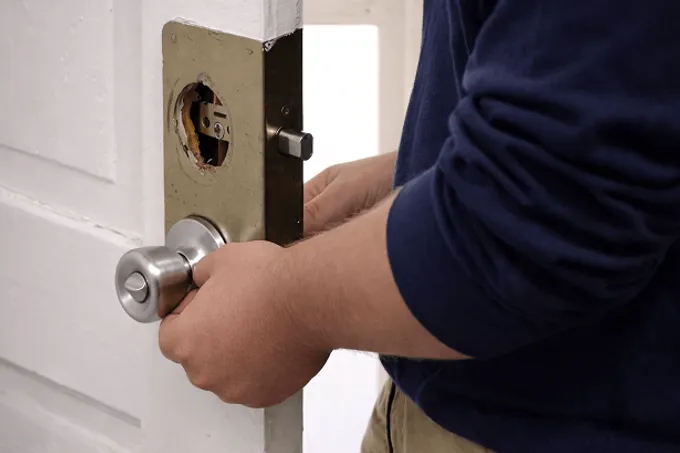
Swapping out a door lock is one of the simplest ways to improve your home's security, whether you've just moved in, misplaced your keys, or fancy something more robust. It involves taking off the old lock and putting a new one in its place. That said, with so many lock varieties on the market — mortice locks, rim cylinder locks, euro cylinder locks among them — picking the right one for your particular door and security needs matters. Each type comes with its own features and protection level, so knowing the differences helps you choose wisely. For trickier installations, or if you're unsure what fits your door, a professional locksmith can offer expert guidance and make sure the new lock goes in correctly, so you know your home is properly protected.
When It's Time to Change Your Locks
A lock change usually gets booked for one of a handful of reasons, and each one shapes how urgent and involved the job is — as does how many locks need doing. Where there's more than one lock on a door, or several locks across the property, the job becomes more urgent and more involved.
Moving into a new property
Even with a full set of keys handed over, there's no telling how many duplicates exist or who still holds one. Changing the lock gives you a clean slate so access is limited to your household alone.
Most insurers recommend, or insist, that new homeowners fit locks meeting a British Standard such as BS3621, both to satisfy policy conditions and to boost security.
Keys lost or stolen
Lost keys leave you uncertain; stolen keys leave you at risk. Either way, changing the lock — or simply the cylinder on many uPVC doors — is typically the quickest way to feel secure again. Once the lock's been changed following lost keys, you'll be issued a fresh set.
Break-ins, attempted break-ins, or forced-entry damage
After a forced entry, the first job is making the door secure again. Sometimes repair is possible rather than full replacement, depending on how bad the damage is. That could mean a new cylinder, mending or swapping a multipoint mechanism, or upgrading handles alongside the lock. Snapping the cylinder is a common break-in tactic, so fitting anti-snap locks helps guard against it happening again.
Locks that stick or fail
If the key's stiff to turn, the door's a struggle to lock, or you find yourself lifting the handle just so, the culprit could be a worn lock, a failing multipoint mechanism, or a door that's out of alignment. A poorly fitted lock can cause the same stiffness, if it doesn't sit correctly within the door and strike plate. Needing to jiggle the key a certain way often points to a deeper fault with the lock or its alignment. A replacement often solves it — but working out the real cause first stops it happening again.
Identifying Your Door and Lock Type
No two lock changes are quite the same, because no two doors are quite the same. The key step is matching the new lock to the door and the hardware already in place.
Internal doors sometimes need lock changes too, for privacy or added security, and getting the keyhole position measured and marked accurately is essential for a good fit.
uPVC and composite doors (euro cylinder and multipoint locking)
Plenty of homes in Redditch have uPVC or composite doors fitted with a euro cylinder and a multipoint locking system — the mechanism that locks the door at several points along the frame. Fitting a high-security euro cylinder can make a real difference to how well your uPVC door resists forced entry. The cylinder sits within a lock case, an essential part of the door's overall security. Often, the cylinder alone can be swapped without touching the rest of the mechanism, provided the mechanism itself is still working properly.
Common lock-change options:
Standard like-for-like cylinder swap
Security-upgrade cylinder (anti-snap, anti-bump, anti-drill)
Combined handle and cylinder upgrade (worth considering if the door is at risk of snapping attacks)
Timber doors (mortice locks)
Wooden doors typically take mortice locks fitted into the edge of the door. These can be swapped like-for-like or upgraded for extra security. Replacing a mortice sash lock tends to be more involved than other lock types because of where it sits within the door edge, so precise measurement along that edge is vital for a proper fit. Sizes and fixing points differ between locks, so getting the measurements and fitting right matters. It's also worth checking the strike plate lines up properly with the latch or bolt for the lock to work securely.
Night latches (often a second lock)
Older front doors often have a night latch, sometimes alongside a mortice deadlock. A night latch is a form of rim lock, usually fixed to the surface of the door for straightforward fitting. Replacing one can make day-to-day use easier while also tightening security, especially if you want better control over who can lock and unlock from inside.
Security Upgrades Worth Considering
A lot of people asking about a lock change are really after a security upgrade. The right choice depends on your door, your local area, and what threats you're guarding against.
Picking the right upgrade keeps your home secure and helps you stay in line with what your insurer expects.
Anti-snap protection for euro cylinders
On many uPVC and composite doors, snapping the cylinder is a well-known attack method. An anti-snap cylinder is built to resist this and cut down the chance of a fast break-in. If your door has a euro cylinder, this is often one of the most worthwhile upgrades available. A quality cylinder with anti-snap features is key to stopping this kind of attack.
Anti-bump and anti-drill features
Depending on the lock's design and build quality, extra features can help resist other forced-entry techniques. A decent locksmith will explain what these actually do in plain terms and suggest a sensible security level for your property.
Insurance-friendly lock standards (where they apply)
Some people specifically want locks described as insurance-approved — standards like BS3621 are commonly referenced for certain doors. What really counts, though, is fitting a lock suited to your door, installed correctly, and appropriate for how you use it — plus knowing what your insurer specifically expects.
Door Frame and Lock Fitting: Doing It Properly First Time
A lock is only ever as secure as the frame it's fitted into and the standard of the fitting itself. Before any new lock goes in, the door frame needs checking for solidity and damage, since even the best lock can't compensate for a weak frame. Your choice of lock — a mortice lock for a timber door or a euro cylinder for a uPVC door — needs to suit both the door and the frame it's mounted in. Fitting it properly means using the right mounting plate and screws and making sure the lock sits flush against the door. Mortice locks demand careful, accurate cutting, while euro cylinders benefit from standard profile sizing that makes replacement more straightforward. If you're not confident tackling it yourself, a professional locksmith, or guidance from the Master Locksmiths Association, can help you steer clear of common mistakes and get the lock fitted to a high standard, keeping it both secure and smooth to use.
Our Approach to Emergency Lock Changes in Redditch
Locked out or facing a security scare, you want a fast response — but you also don't want unnecessary mess left behind.
Emergency callouts often mean gaining urgent access to a locked door, frequently outside standard working hours.
Non-destructive entry, wherever it's possible
Getting you back inside without causing needless damage is the priority. Where a non-destructive method will work, it's almost always the better outcome for your door, your wallet, and your peace of mind.
Fitting the lock properly, not just patching it up
Once you're back in, the lock needs replacing or upgrading properly so the property is secure again. Some locks can be operated from either side of the door, adding both convenience and security. That means checking it operates smoothly, lines up with the frame correctly, and locks reliably every time.
Extra attention after a break-in or forced damage
If the door or frame has taken damage from forced entry, the lock change may need to go hand in hand with repairs or replacement parts so the door still closes and locks as it should. Fitting a new lock into a damaged door on its own can leave weaknesses behind.
Taking Out a Cylinder Lock: What's Involved
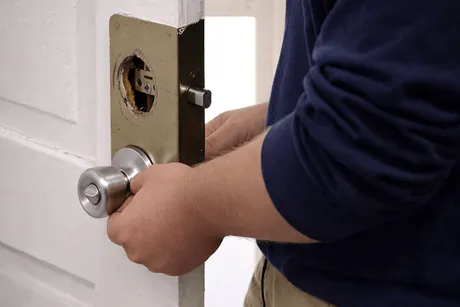
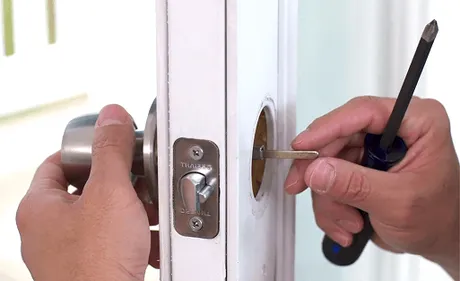
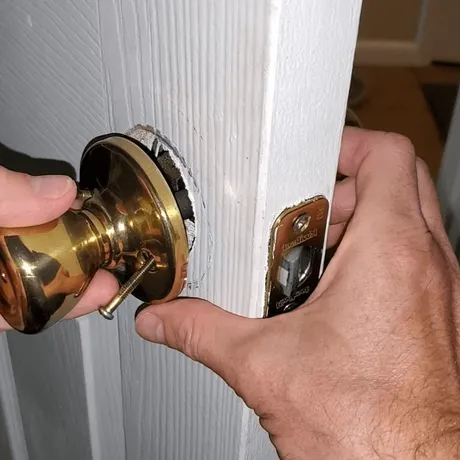
Taking out a cylinder lock, such as a euro cylinder, is a fairly simple job when done with care. Begin by opening the door and finding the retaining screw along the door's edge, which holds the cylinder in place. With the screw removed, ease the cylinder out of the lock body gently, being careful not to force it or damage the mechanism. It's worth measuring the old cylinder precisely before buying a replacement, since getting the size right is what guarantees a snug fit and smooth operation. If the cylinder won't budge or the lock's damaged, specialist tools might be needed, and it's sensible to bring in a professional locksmith rather than risk making things worse. Understanding how the mechanism functions and following the correct steps makes replacing it far more straightforward and helps keep your home secure.
Lock Compatibility and Measuring: Why Approximate Won't Cut It
Lock changes tend to go wrong when the parts don't quite match up. Getting the replacement right depends on measuring and checking the key details carefully. The new lock needs to fit the existing cut-out in the door, and during fitting, the cylinder insert must go in correctly and be secured with the fixing screw for it to operate properly.
For euro cylinders (common on uPVC and composite doors)
The cylinder's length and configuration make a real difference. Getting the size right avoids overhang, which can make snapping easier, and ensures the key turns freely without any strain.
For mortice locks and night latches
Case size, backset, fixing points, and door thickness all determine what will fit and how secure it'll be once installed. The aim is a clean fit — no gaps, no wobble, no compromised fixings.
When it's really a door alignment issue
Sometimes a lock seems faulty when the actual problem is the door not sitting properly in its frame. If you're having to push, lift, or pull the door to get it to lock, alignment could be part of the fix — and sorting it out helps the new lock last longer.
Cost Factors for a Door Lock Change in Redditch
Prices differ because jobs differ. The main things that affect cost include:
The type of lock involved — garage locks and front door locks, for instance, can carry different price points.
Whether a door handle is also being replaced or upgraded, or extra door bolts are being fitted, since these add to the overall cost.
Lock and door type
Euro cylinder versus mortice lock versus night latch
Whether a multipoint system is involved (swapping just the cylinder is generally simpler than replacing the whole mechanism)
Security level chosen
Higher-security cylinders or upgraded hardware cost more upfront but often pay off in better protection long term.
How many locks need changing
Doing several locks at once — front door, back door, other entry points — takes more time and more parts.
Time of day and how urgent it is
Callouts outside normal hours or on an emergency basis cost more, reflecting response speed and availability.
Condition of the current lock and door
A seized, damaged, or forced lock may need extra work. If drilling or extraction can't be avoided, that affects the price too — though the goal is always to prevent unnecessary damage where possible.
Service option
Average time on site
Standard hours (7am–6pm), from
Out-of-hours (6pm–7am), from
Notes
uPVC/composite euro cylinder swap (like-for-like)
45 minutes
£59
£99
Old cylinder out, correctly sized replacement fitted and tested; parts charged separately.
uPVC/composite high-security euro cylinder upgrade (anti-snap)
1 hour
£59
£99
Upgrade to an anti-snap/anti-bump/anti-drill cylinder; correctly sized to avoid overhang; parts charged separately.
uPVC/composite handle and cylinder upgrade (combined)
1 hour 15 minutes
£74
£124
New handle set and cylinder fitted, multipoint engagement aligned and tested; parts charged separately.
Timber door mortice lock swap (like-for-like)
1 hour 15 minutes
£74
£124
Case and backset measured, lock fitted and tested, tidied up where feasible; parts charged separately.
Timber door mortice lock upgrade (BS3621 where suitable)
1 hour 30 minutes
£89
£149
Upgrade to an insurer-referenced standard where fitting allows; may need minor adjustment for fit; parts charged separately.
Night latch replacement (rim lock)
1 hour
£59
£99
Old night latch removed and replaced, keep/strike set for smooth closing; parts charged separately.
Emergency non-destructive entry plus lock/cylinder change (lost keys or lockout)
1 hour 15 minutes
£74
£124
Non-destructive entry attempted first, followed by secure replacement; parts charged separately.
Lock change after forced entry or a seized lock (may require drilling/extraction)
1 hour 45 minutes
£104
£174
Making the door secure again after damage; drilling only where unavoidable; parts extra and cost depends on condition.
uPVC multipoint mechanism replacement (where the mechanism has failed)
2 hours 15 minutes
£134
£224
Fault diagnosed, mechanism replaced and re-tested; scope depends on parts availability; parts charged separately.
Each further lock/cylinder changed on the same visit (add-on)
30 minutes
+£30
+£50
Additional labour per extra lock once the first hour's work is covered; parts charged separately.
Lock Changes for Landlords, Tenants, and Property Managers
Lock changes crop up often at tenancy changeover and during property management, particularly when it's unclear who holds which keys.
End of tenancy and new tenancies
Changing the locks re-establishes proper key control and cuts the risk of someone getting in who shouldn't. It also helps avoid disputes when keys go missing at handover.
Letting agents and HMOs
Where several occupants and keyholders are involved, having a consistent approach matters. A clear process for gaining access, confirming authority, and choosing lock types keeps ongoing management simple.
Confirming occupancy and responsible access
A trustworthy lock change service takes safety seriously. For some callouts, especially those requiring entry, you may need to show proof you're entitled to access the property — ID plus something linking you to the address, or confirmation from a landlord or agent, for example. This safeguards residents and ensures the job is done responsibly.
Rekeying or Replacing: What's Actually Practical
For most UK homes, rekeying in the way people picture it isn't always the easiest route, particularly with standard euro cylinders where a straight swap is far simpler. Replacing the lock is usually the clearer choice — it resets access straight away, can boost security at the same time, and removes any doubt about wear or compatibility issues.
If you're not sure what's needed for your particular lock, the sensible move is to work out what's currently fitted and go for the most secure option that fits.
Smart Locks: An Upgrade Worth Weighing Up
If better access control is the reason you're changing locks, a smart lock might be worth considering — particularly for households after keypad entry, app-based control, or simpler management of who can get in. Whether it's the right fit depends on your door type, the existing mechanism, and how you want entry to work in practice. For some, a solid mechanical upgrade — an anti-snap cylinder on a uPVC door, for instance — is the simplest security improvement; for others, smart access is what matters most.
What a Proper Lock Change Should Deliver
A well-done lock change should leave you with:
A lock that fits properly and works smoothly
A door that closes, aligns, and locks dependably
Security features suited to your door type and level of risk
A clear explanation of what's been fitted, why, and what upgrade options exist
A reasonable guarantee on parts and labour, where offered
FAQs on Door Lock Changes in Redditch
How fast can a lock be changed
Most cylinder swaps can be done quickly once the right part's been identified. If a multipoint mechanism has failed, diagnosing the issue and sourcing parts can add to the timeline.
Will changing the lock damage my door
The goal is always to keep disruption to a minimum. Non-destructive methods are used where possible, and new parts are fitted cleanly. Damage is more likely if the lock is seized, forced, or misaligned, which is why a proper check beforehand matters.
Should I change the locks after moving in
It's one of the easiest ways to make sure only you and your household can get in, even if all the keys were handed over.
Can a lock be changed if the key's snapped inside it
Usually, yes. It depends on whether the broken key can be removed cleanly and whether the lock itself is damaged. Sometimes replacing it outright is the most efficient fix.
Which lock is best for a uPVC door
For most uPVC and composite doors, fitting an anti-snap euro cylinder is a strong upgrade. Getting the size and fitting right matters just as much as the cylinder itself.
Local knowledge
In Redditch
Hunt End's planned estate housing, much of it dating from the 1960s and 1970s, was built with uPVC doors fitted as standard rather than retrofitted later, which means most lock changes here involve replacing worn or non-compliant euro cylinders. We fit TS007 3-star euro cylinders as a matter of course on these properties, since the anti-snap, anti-drill construction addresses the specific vulnerability of the Euro-profile format found across this part of Redditch. Where timber doors remain, particularly on older council-built stock, a BS3621 mortice deadlock brings the door up to a standard most insurers now expect.
At Lakeside, the newer flat developments along the waterfront present a different set of considerations. Communal entrances, estate gates and shared access points mean lock changes are rarely a single-door job. We work with managing agents to establish key control across the block, ensuring that master-key systems remain properly restricted and that individual flat locks can be changed without compromising the wider system.
Crabbs Cross, with its mix of 1960s semi-detached and detached properties built for commuting households, tends to combine a front door euro cylinder with a night latch on the same leaf, a common configuration from that era of construction. When changing locks here, we check that the two work together correctly, since a mismatched rim latch and cylinder lock is a frequent cause of doors that do not secure as intended.
Local FAQs
My insurer says I need a BS3621 lock on my front door in Headless Cross. What does that actually mean for a semi-detached property like mine?
BS3621 refers to a British Standard mortice deadlock, typically fitted alongside a night latch on timber doors common to post-war semi-detached stock in Headless Cross. Insurers usually require this standard as a minimum, and we can assess whether your existing door thickness and frame will take a five-lever mortice case or whether reinforcement is needed first.
I have uPVC doors on a 1970s estate house in Hunt End. Is upgrading the euro cylinder worth it, or should I replace the whole mechanism?
Most uPVC doors across Hunt End and similar estates use a Euro-profile cylinder within a multi-point locking gearbox, so in many cases only the cylinder needs upgrading to a TS007 3-star rated version rather than the full mechanism. This standard resists drilling, snapping and picking, and pairing it with a British Standard kitemarked handle gives layered protection without replacing sound gearbox hardware.
We manage a block of flats near Lakeside and keep losing track of who holds keys. What's the sensible approach?
New-build flat complexes around Lakeside benefit from a key control system, often a restricted or patented suite where duplication requires signed authorisation from the freeholder or managing agent. This is usually combined with a master-key hierarchy covering communal entrances and estate gates, so individual flat keys stay separate from those needed for shared access points.
Areas we cover in Redditch
Local engineers based around Redditch, covering:
- Riverside
- Bordesley
- Greenlands
- Hunt End
- Enfield
- Lakeside
- Crabbs Cross
- Church Hill North
Postcode districts: B97 · B98