Door Lock Replacement in Redditch
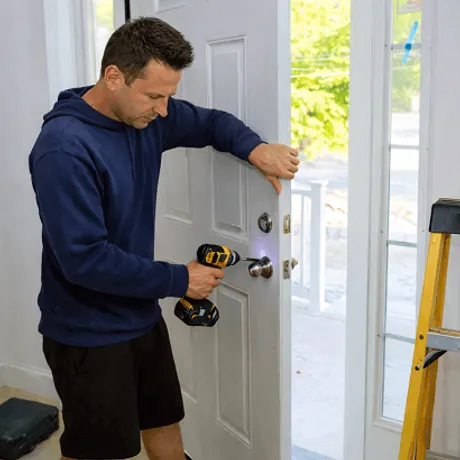
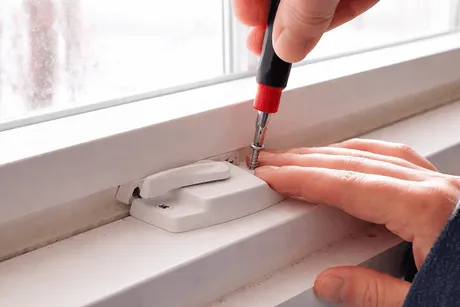
Across Redditch's postcode districts B97 and B98, uPVC doors fitted with Euro-profile cylinders remain the standard, from the 1960s estates of Ipsley and Hunt End to newer developments at Lakeside. Door lock replacement typically begins with precise cylinder measurement, followed by an anti-snap upgrade where the existing hardware falls short of current standards. Where a multipoint gearbox has failed, we assess whether like-for-like replacement or a broader mechanism upgrade best suits the door.
- ✓ DBS-checked
- ✓ Fully insured
- ✓ Work guaranteed
- ✓ Local engineers
Working Out What Actually Needs Replacing
Start by identifying the lock type. UK homes use a range of different lock systems, most commonly: euro cylinder locks (found on uPVC, composite doors and some modern timber doors - euro cylinders are extremely common and turn up on both front and back doors); multipoint locking systems (lift-handle mechanisms with hooks or rollers, combining a cylinder with an internal mechanism); mortice locks (deadlocks and sashlocks recessed into timber doors); and nightlatches (usually fitted to timber front and back doors, often alongside a rim cylinder and sometimes a mortice deadlock). Euro cylinders stand out as the most adaptable option, appearing across countless door and security combinations.
Getting the identification right matters, because it decides whether you need a straightforward cylinder swap, a mortice case replacement, a nightlatch change, or a repair to the multipoint mechanism or gearbox rather than simply a new barrel.
The door type and material also shape your options. Different doors call for compatible lock mechanisms if security is to be optimal - a lock ideal for a timber door won't necessarily suit a uPVC one, and the reverse is equally true. uPVC and composite systems usually depend on a correctly aligned multipoint strip and keeps, frequently paired with euro cylinders, whereas timber doors often need precise mortice sizing and solid fixing points. Matching the lock type to your door style properly ensures a good fit and stronger security.
Repair or Replacement: How to Tell Which You Need
A lock that seems faulty can actually be a door problem in disguise. A stiff key can point to misalignment from a dropped door, worn hinges or swollen timber.
A key that snaps might mean wear inside the cylinder, but it can equally be caused by excess torque from an alignment issue.
A uPVC door that only locks when you really haul up on the handle often signals a failing gearbox or keeps that are out of position.
A loose handle or a latch that won't catch properly may well be a hardware fault rather than anything to do with the cylinder.
Bolts deserve a look too, since they're a key part of what keeps a door secure and need checking or replacing when worn.
A sound replacement job begins by working out whether the lock itself is at fault, or whether it's the door-set around it causing the trouble.
Security Standards: What Good Looks Like
Insurers and homeowners alike often want confidence that a new lock meets recognised UK security expectations. Depending on the lock in question, that might mean choosing products aligned with standards such as BS 3621 for certain lock types, or cylinders tested to recognised performance standards common in the UK market. In practice, the aim is simple: pick a lock that suits the door, does the job required, and matches the level of security you're after.
Standard euro cylinders can be an easy target for forced attacks, so upgrading to one rated anti-snap, anti-bump, anti-pick and anti-drill is often the single biggest security gain you can make when replacing a lock. It's equally important that the cylinder is the right size and doesn't stick out too far, with protective hardware such as reinforced handles or cylinder guards and escutcheons worth considering too.
Security works as a whole system rather than one part on its own - a strong cylinder paired with a weak handle still leaves a gap. On many uPVC and composite doors, upgrading the handle and escutcheon protection alongside the cylinder makes a real difference to how well the door resists attack. Choosing hardware that's proven to last helps keep that security in place for the long run.
Emergency Lock Replacement Versus Scheduled Work in Redditch
When you need it sorted the same day, emergency call-outs typically cover lost or stolen keys, lockouts that need a lock replaced, break-ins or attempted break-ins (where broken or damaged windows need securing too), and locks that have failed and no longer secure the door. In these situations, getting the property secured fast comes first, sometimes with temporary measures in place if parts for an unusual system aren't immediately to hand.
Non-destructive entry versus replacement: if you're locked out, the ideal outcome is getting back in with as little damage as possible. Where replacement genuinely is necessary - say, keys are missing and security's compromised, or the lock itself is damaged - it's important the approach is explained clearly so you know exactly what's being replaced and why.
Multipoint doors: is it just the cylinder, or a gearbox/mechanism fault?
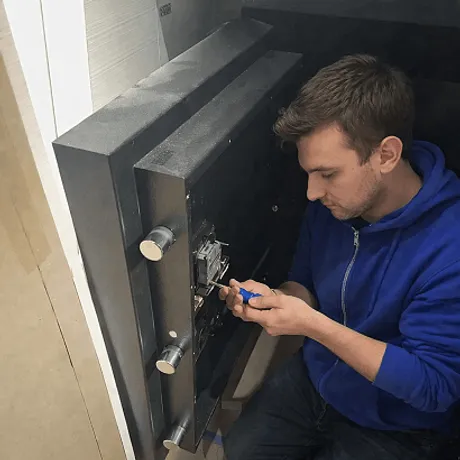
With multipoint doors, it's easy to assume the cylinder is at fault simply because that's the part you can see, when the real problem may be buried within the door itself. The uPVC door lock mechanism, especially the central gearbox, plays a vital role in how a multi-point locking system functions.
Signs that you might be facing more than just a cylinder problem include: the handle lifts but the locking points won't engage properly; the door only locks once you force it tightly against the frame; the bolts don't throw as they should; or the key turns yet the mechanism fails to respond consistently.
Multi-point locking systems exist to give doors a higher standard of security, which is exactly why a mechanism fault needs proper diagnosis.
Swapping a cylinder is a quick job when the rest of the mechanism is sound. But if the gearbox or multipoint strip itself has broken down, you're looking at a mechanism repair or replacement instead, and that changes both how long the job takes and what it costs.
What happens during a lock replacement
Most lock replacements follow a dependable pattern from start to finish.
First comes assessment and identification, working out the lock type, the door type, and what's causing the fault. This includes checking the condition of the mechanism and bolts for wear, damage, or faults that could be putting the door's security at risk.
Next is measuring and matching the correct parts, which matters a great deal with euro cylinders and mortice cases. The old components are then removed, the new lock (plus any upgraded handles or guards, if needed) is fitted, and the whole thing is tested thoroughly, covering locking points, latch action, key turning and alignment. Finally, you're given the new keys and shown how to use the lock correctly.
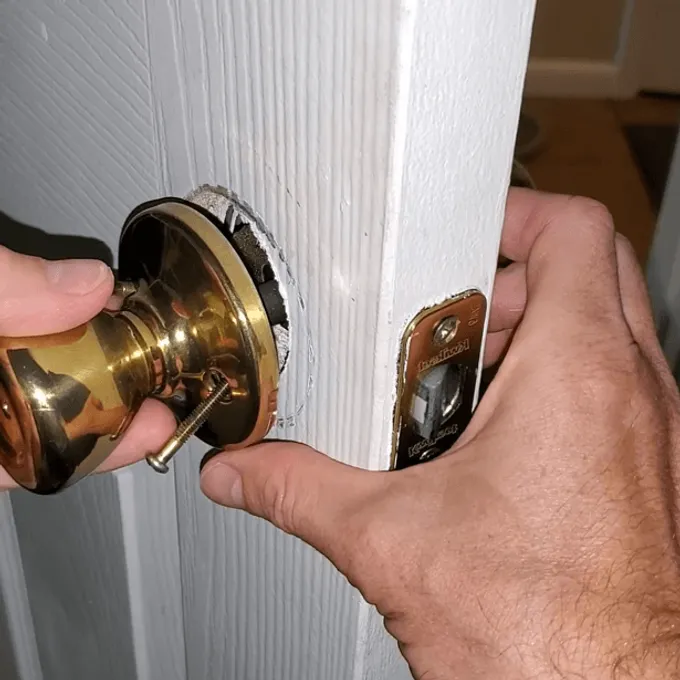
Getting the sizing right on a euro cylinder is not a minor detail; it directly affects both security and how smoothly the door operates. The cylinder has to match the door's thickness, work with the handle/escutcheon setup, and suit the internal and external offsets. Get the sizing wrong and you risk protrusion, which is a security weak point, or poor alignment, which makes the lock awkward to use. When the old cylinder comes out, it should be aligned carefully so it slides free without causing damage.
As for timing, most standard jobs are completed quickly once the right parts are to hand. Trickier multipoint faults, unusual door types, or alignment problems can take longer, and a good locksmith should be able to give you a realistic idea of time on site once they've seen the lock and assessed its condition.
How much does door lock replacement cost in Redditch
Door lock replacement costs in Redditch depend on the type of lock, how the job is carried out, and how urgently it's needed.
A proper quote should set out exactly what you're paying for: the lock and parts (including its security grade), labour, any out-of-hours charge if it's an evening, weekend or emergency call-out, and the final testing, adjustment and checks.
The factors that actually move the price are the lock type (a simple cylinder is very different from a mortice case or a full multipoint mechanism), the door's material and layout, the security grade and features involved (such as anti-snap protection or other higher-security options), how urgent the job is (a scheduled visit versus an emergency out-of-hours call), and any extras like handle upgrades, reinforcement plates, door alignment work, or additional/upgraded keys.
In short, the final figure shifts according to the lock involved, how long the work takes, and the particular circumstances of your door and security needs.
If the job relates to a break-in or an insurance claim, it's worth keeping a proper invoice that itemises the work done and the parts fitted.
Typical guide prices: euro cylinder replacement, like-for-like (around 45 minutes) — from £59 standard hours, £99 out-of-hours; labour only, with cylinder and keys charged separately.
uPVC/composite multipoint cylinder change with full function test (around 1 hour) — from £59 standard hours, £99 out-of-hours; covers checking the lift-handle action and locking points, parts extra.
High-security anti-snap cylinder upgrade with correct sizing and fitting (around 1 hour) — from £59 standard hours, £99 out-of-hours; anti-snap and anti-bump options available, parts extra.
Nightlatch replacement on a timber door (around 1 hour) — from £59 standard hours, £99 out-of-hours; includes fitting and testing, nightlatch/rim cylinder extra.
Mortice deadlock replacement on a timber door (around 1 hour 15 minutes) — from £74 standard hours, £124 out-of-hours; case size must match, lock and keys extra.
Mortice sashlock replacement, latch plus deadbolt (around 1 hour 30 minutes) — from £89 standard hours, £149 out-of-hours; case and handle compatibility checked, parts extra.
Multipoint gearbox or mechanism repair/replacement (around 2 hours 15 minutes) — from £134 standard hours, £224 out-of-hours; this goes beyond a cylinder swap, parts and availability vary.
Emergency make-safe following a break-in, temporary securing (around 1 hour 30 minutes) — from £89 standard hours, £149 out-of-hours; secures the door, with follow-up parts possibly needed.
Smart lock retrofit where compatible (around 1 hour 45 minutes) — from £104 standard hours, £174 out-of-hours; compatibility checked on site, smart lock supplied separately.
Reinforced handle or cylinder guard fitted alongside a main job (around 30 minutes) — an added £30 standard hours, £50 out-of-hours; hardware charged extra.
Additional key supply, each, subject to availability (around 15 minutes) — an added £15 standard hours, £25 out-of-hours; depending on key type and restrictions.
How to find a locksmith you can trust in Redditch
Securing your home or business starts with finding a locksmith in Redditch who you can genuinely rely on.
A trustworthy locksmith should have broad, hands-on experience across all the common lock types, including mortice locks, euro cylinder locks, and multi-point locking systems. They also need to understand how different door materials behave, whether you have a timber door, a composite door, or a uPVC door, so they can recommend and fit the lock that genuinely suits your property.
Look for someone who knows their way around British Standard locks and can talk you through the options that best match your security needs. A good locksmith will inspect your doors, walk you through what each lock type offers, and make sure whatever's fitted meets current security standards. Choose a locksmith who understands the full spectrum of door locks and knows how to match them to your doors and requirements, and you can trust that your property will be secure and will satisfy insurance and safety expectations.
Qualities to expect from a professional locksmith
A professional locksmith should turn up with the right qualifications, genuine hands-on experience, and the correct tools for the job. They should be comfortable working across the full range of door locks, from mortice locks and euro cylinder locks through to more advanced mechanisms and anti-snap solutions. Look for someone capable of dealing with a snapped lock, fixing a faulty mechanism, or replacing lost or broken keys without fuss.
A locksmith worth using will stock a wide range of door locks from well-known manufacturers, giving you access to the latest security features and plenty of choice to suit your circumstances. Their work should span emergency call-outs and urgent repairs right through to planned upgrades and security advice. Whatever you need, whether that's a new cylinder, a mortice lock swap, or a high-security padlock, a good locksmith will have both the know-how and the stock to get the job done quickly and properly.
Questions worth asking before you book a locksmith
Before you hire a locksmith, it pays to ask a handful of important questions so you end up with the right service for your home or business:
How much experience do you have working with different lock types, including upvc door locks and timber door locks?
Do you know your way around British Standard locks, and could you suggest the best option for my property's security level?
Do you provide an emergency call-out service, and how quickly can you usually get to an urgent job?
Will you give me a straightforward quote that covers both labour and parts?
Can you point me towards references or reviews from customers who've had similar work carried out?
If I've lost my keys, what's your approach—will you cut a new set or rekey the lock instead?
Asking these questions upfront helps confirm the locksmith you pick can handle exactly what you need, whether that's fitting a new lock to a upvc door, sorting replacement keys, or upgrading to a British Standard lock.
Warning signs to watch for and how to steer clear of scams
When you're looking for a locksmith, it pays to know the warning signs that might point to a scam or poor workmanship. Be wary of anyone quoting prices that look too good to be true, since this often hides extra charges or shoddy work later on. Take care too if a locksmith can't give straight answers about their qualifications, background, or the services they cover, or if they try to pressure you into deciding on the spot.
A reliable locksmith will be upfront about what they do, ready to share references or reviews, and happy to put a clear quote in writing before any work begins. Steer clear of anyone insisting on full payment before starting, or who won't walk you through how they work. Checking reviews, doing a bit of homework, and confirming credentials all go a long way toward protecting your property and your peace of mind. Staying alert and asking the right questions means you can pick a locksmith with confidence, knowing your home will be properly secured.
Choices and upgrades to consider when replacing locks
Rekeying vs full replacement
There are times when rekeying makes sense—say, if you just need to change who holds working keys without swapping out the whole lock. Other times, such as when a lock is damaged, needs a security upgrade, or won't fit with newer hardware, full replacement is the sensible choice. It comes down to matching the option to your budget and how much risk you're comfortable with.
Keyed alike systems (using one key for several doors)
Where a property has more than one external door—front, back, side—keyed alike setups can be a handy upgrade, provided the locks are compatible. This means one key opens every door, so you're not juggling a bunch of different keys.
Thumbturn versus key-operated on both sides
Having a thumbturn on the inside can make everyday use easier and may help with quick exits in certain situations. Which option suits you depends on the door's design, where any glazing sits, what the household needs, and overall security concerns.
Restricted keys and controlled key duplication
In situations where tighter control matters—shared accommodation, sensitive premises, or simply wanting to stop unauthorised copies being cut—a restricted key system could be worth considering. These typically involve registering keyholders and stricter limits on duplication.
Master key setups (for HMOs and small commercial premises)
For landlords or smaller business premises, a master key system can make managing access much simpler. It's a more specialised job, and works best when it's planned out properly across every door involved.
Checking the whole door set, not just the lock
Replacing a lock is also a good moment to review the door as a whole:
Frame strength and keeps
Hinge security
Strike plates and reinforcement
Glazing vulnerability near the lock
Windows: Look out for any broken or damaged glazing and get it repaired, replaced, or boarded up as needed to keep the property secure, particularly following an attempted break-in.
This matters most after an attempted burglary, where the door or frame may have taken some strain.
Rental properties, flats and shared doors in Redditch
Landlords and tenants: permissions and handover
With rented properties, changing locks can bring responsibilities around getting permission, giving notice, and passing keys on to the right people. It's important that any changes stay lawful, are properly recorded, and don't fall foul of tenancy agreements.
Communal entrance doors and freeholder rules
Entrance doors to flats or shared communal doors are often governed by building rules. Certain doors need to keep a particular locking system in place for safety, access control, or management reasons, so any replacement work needs to respect those requirements.
Fire door considerations
Where a door is part of a fire safety system—common in blocks of flats—the hardware fitted needs careful thought. Replacements mustn't undermine the fire performance required, and depending on the door's design and function, specific approved parts may be necessary.
Fitting a smart lock versus a standard lock replacement
When a smart lock makes sense
Smart locks can suit situations where you want to manage access remotely, issue temporary codes, control things through an app, or cut down on handing out physical keys. They can sometimes be fitted to existing doors, though whether they're suitable depends on the door type, current lock setup, and what level of security you expect.
Practical smart lock considerations
Before opting for a smart lock, it's worth thinking through:
Battery life and what happens as a fail-safe when it runs low
Whether the lock depends on Wi-Fi or Bluetooth, and what happens if the connection drops
Backup ways in, such as a physical key, keypad, or emergency power
Managing app access for family members, tenants or visitors
Whether it works with multipoint doors and any handle-lift requirements
A smart lock should add convenience without chipping away at security or dependability.
Door lock replacement questions answered
How can I tell which lock is fitted to my door?
Check the door style and the way it locks shut. A lifted handle that engages several points usually means a multipoint system; a cylinder visible within the handle plate often points to a euro cylinder, a common style of cylinder lock found on many modern doors; a lock set into the timber itself is generally a mortice; and a latch fixed to the surface is typically a nightlatch. If you're still not sure, a couple of photos showing the door edge and lock area will usually make the type obvious.
Is it possible to swap out only the cylinder?
Frequently, yes, especially with euro cylinder doors where the rest of the mechanism is in good working order. In most of these cases the cylinder lock can simply be withdrawn and a new one fitted without disturbing anything else. With multipoint doors, though, changing the cylinder won't sort out a worn gearbox or faulty strip mechanism.
I've mislaid my keys — does the lock need changing?
Where keys have gone missing and security may be at risk, fitting a new lock is usually the safer route. Locks on your home carry real weight when it comes to keeping both security and everyday access working properly, so it pays to make sure they're up to the job. Depending on the situation, rekeying or simply swapping the cylinder can achieve much the same result, making sure the old keys no longer open the door.
Could changing the lock cause damage to my door?
A correctly fitted replacement shouldn't cause any damage. Where forced entry or drilling is unavoidable because the existing lock has failed, you should be talked through the process and any changes involved before work begins.
Am I able to get spare keys made?
Yes. It's worth checking how many keys come as standard with your chosen lock and what your options are for extras, particularly if you're considering a restricted key system, where key control means copies can't be made without authorisation.
Local knowledge
In Redditch
Lakeside's new-build flats and waterfront developments call for a different approach to door lock replacement than the surrounding estates. Communal entrance doors and estate gates typically use multipoint gearbox mechanisms tied into wider access-control systems, so cylinder measurement must account for master-key hierarchies serving several blocks at once. Where individual flat doors need attention, we carry out like-for-like replacement to preserve compatibility with the building's existing key system, ensuring residents are not left needing separate arrangements with a managing agent.
Crabbs Cross, largely built up through the 1960s to 1980s as a suburban commuter area, presents a straightforward mix of semi-detached and detached properties fitted with uPVC doors and Euro-profile cylinders. Here, an anti-snap upgrade is often the most practical improvement we recommend, replacing older cylinders vulnerable to snapping with British Standard rated alternatives while retaining the existing multipoint gearbox where it remains in good working order.
Foxlydiate's residential expansion zone, developed from the 1960s with a blend of semi-detached and terrace housing, generally follows the same uPVC and Euro-profile pattern seen elsewhere in Redditch (postcode districts B97 and B98). Cylinder measurement remains essential before any replacement, as door thickness and handing vary between the original 1960s builds and any later replacement doors fitted since, and getting this wrong leads to poorly fitting hardware.
Local FAQs
My uPVC front door in Enfield still has the original euro cylinder from the 1990s. Should I go for a like-for-like replacement or upgrade the lock itself?
Given the age of the cylinder, this is a good opportunity to move beyond like-for-like and fit an anti-snap upgrade rated to TS007 3-star, or a 1-star cylinder paired with 2-star hardware. Cylinder snapping remains a common method of forced entry on estate semi-detached properties of that era, so the modest cost difference is worth it. We would take a cylinder measurement on site to confirm the correct case sizing before ordering.
The door on our flat in Lakeside won't lock properly and the handle feels loose. Is this a cylinder problem or something else?
On multipoint uPVC doors this is often the multipoint gearbox rather than the cylinder itself, particularly in newer builds where the mechanism sees frequent use from multiple occupants. We would need to inspect whether the hooks, rollers and cams are engaging correctly before recommending a gearbox replacement rather than simply swapping the cylinder. If your building uses a master-key system for communal access, we would also check that any replacement is compatible with that arrangement.
We have a Victorian terrace in Bordesley with the original mortice lock. Can we just fit a standard modern lock instead?
Bordesley's older terraces often fall under listed-building or conservation considerations, so a standard modern lock is not always appropriate without checking the property's status first. In most cases we recommend a period-appropriate mortice lock that meets BS3621 for insurance purposes, rather than switching to a euro-cylinder system that would require altering the original door structure. We can advise on this during an initial inspection, taking into account both the door's construction and any local restrictions.
Areas we cover in Redditch
Local engineers based around Redditch, covering:
- Lakeside
- Lodge Park
- Greenlands
- Hunt End
- Enfield
- Crabbs Cross
- Church Hill North
- Callow Hill
Postcode districts: B97 · B98