Door Repairs in Redditch
Across Redditch, from the 1960s semi-detached estates of Hunt End to the Victorian terraces of Bordesley, door problems tend to follow the building stock. Uneven door alignment and dropped hinges are common on older frames, whilst uPVC doors on estate properties often need keep adjustment to restore proper multipoint engagement. We assess each door on site before recommending repair over replacement.
- ✓ DBS-checked
- ✓ Fully insured
- ✓ Work guaranteed
- ✓ Local engineers
Emergency door repairs in Redditch when your door won't secure
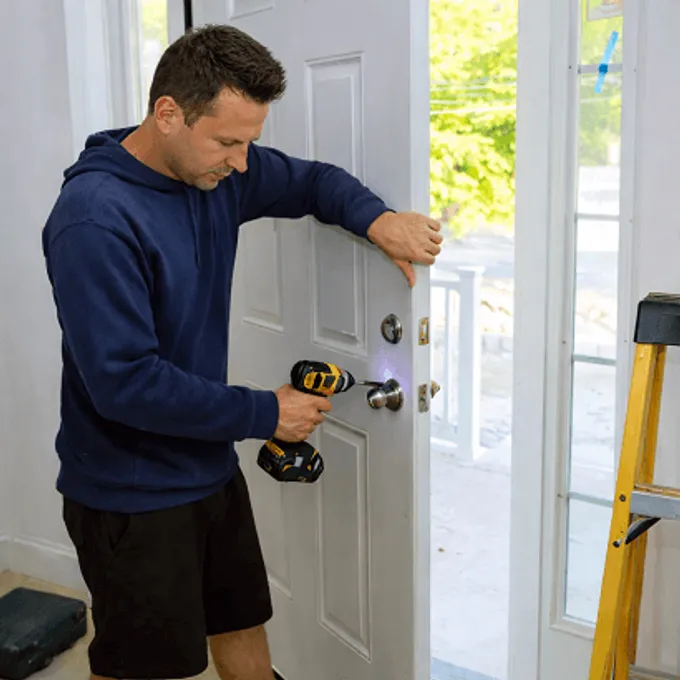
A door that won't lock isn't just annoying — it leaves your property exposed there and then. Emergency door repairs focus on getting security and safe access back, whatever's caused it: a failed lock, a dropped door, or damage from an attempted break-in. Our team responds quickly and reliably, so anyone facing an urgent security problem gets prompt, professional support. Emergency appointments can be booked straight away, so your property is secured with minimum delay.
A good emergency response isn't about rushing blindly — it's about working out fast whether the issue is misalignment, a failed euro cylinder, a jammed multipoint mechanism, or the frame having moved, then applying a fix that genuinely restores reliable locking, not a stopgap that half-works.
Typical emergency situations, and how experienced engineers deal with them:
Door won't lock at all — the multipoint isn't engaging, handle travel has been lost, the gearbox has failed, or the door has dropped onto the keeps.
Key snapped in the lock — extraction first, followed by a check on whether the cylinder needs replacing.
Lock stiff or seized — could be cylinder wear, debris inside, poor alignment, or an internal fault.
Damage after a burglary — split door edges, torn-out keeps, a cracked frame, or the lock area forced.
What making the property safe actually involves: restoring a lock you can rely on, reinforcing any fixings that have been compromised, and making sure the door closes cleanly and latches without needing to be forced. If full repair has to wait on parts, temporary securing can keep the door working and secure in the meantime.
Why doors stop locking or closing properly
Nearly every door repair issue comes down to one of three things: misalignment, a hardware fault, or movement in the door or frame. Treating just the symptom instead of the cause is why a quick fix often undoes itself soon after. Manufacturers changing their designs can also make matching replacement hardware harder to find, which is why sourcing the right compatible parts — or getting a skilled adjustment instead — matters.
Our advice: watch how the door behaves — note any sticking, gaps or misalignment, and listen for odd noises. Spotting the real cause early can save you from a bigger repair bill, or a full replacement, later on.
Proper diagnosis means watching the door through its entire swing, checking where it meets the frame, how the latch lines up, and whether the lock engages cleanly at every point. Windows can suffer from the same alignment and hardware problems as doors, so it's worth checking those too if something seems off. With glazed doors, the glass quality matters during any repair, since better glass improves both durability and insulation. Double glazing is also worth considering for extra security and lower heat loss.
Signs pointing to alignment rather than a simple lock fault:
The door only locks if you really haul up on the handle — often a sign that replacement parts don't quite match what was there before, throwing out the alignment.
The latch catches on the strike plate or needs a push to close — any new hardware needs to match the original to keep things aligned properly.
There are uneven gaps visible around the frame — replacement parts need to match your existing setup for the repair to hold.
The door sticks at a top or bottom corner, particularly in damp or cold weather — check every component matches and lines up correctly to stop this recurring.
Signs pointing to a component failure instead:
The handle feels loose, sags, or won't spring back.
Lifting the handle does nothing — no engagement at all.
The key turns part-way then binds or stops dead.
The door locks fine once, then fails on and off after that.
Locks that are simply faulty, making it hard to lock or unlock the door at all.
Movement causes worth knowing about in the UK climate: seasonal swelling in timber, small amounts of building movement, hinge wear, and frames settling over time can all shift how a door sits. A repair that allows for this — adjustment alongside restoring the hardware properly — is what keeps the fix from failing again.
Dealing with movement issues early can spare you a much bigger repair job further down the line.
uPVC door repairs in Redditch for dropped doors and struggling locks
uPVC doors are among the most widely fitted external doors in the UK, and they tend to go wrong in the same few ways: the door drops, the keeps stop lining up, and the multipoint lock starts to fight against it. What you're left with is usually a door that almost locks, or one that needs a shove to shut.
Our team offers a quick, efficient uPVC door repair service with minimal disruption, for homes and businesses alike. We know manufacturers changing their designs can make sourcing matching replacement parts tricky, so we draw on our experience to find the right solution. A proper uPVC repair usually means realigning the door first, then fixing whatever hardware has been strained by that misalignment — not just swapping a part and hoping for the best. Every job is guaranteed, and we keep things good value without cutting corners on quality. Booking a uPVC door repair is straightforward, and you'll get professional service from start to finish.
Dropped uPVC doors and hinge-side problems: a dropped door usually shows up as catching, scraping, or a latch that won't quite meet the keep. Fixes can include adjusting hinges, replacing worn ones — matched carefully to what's already fitted, for a clean repair — and restoring the right compression so the door seals properly without being forced.
Multipoint locking mechanism repair and replacement: multipoint systems can fail at several points — the gearbox, internal springs, the latch, hooks, rollers, or the strip itself. Parts from different manufacturers can look alike but not actually interchange, so pinning down the correct manufacturer is key to sourcing a compatible replacement. The approach is to check first whether the mechanism has genuinely failed, or is simply not engaging because of misalignment.
Handles, spindles, and lost movement: if the handle turns but the lock doesn't respond, the spindle or internal drive may be worn out. When fitting a new handle set and spindle, or sorting the internal follower, matching it to your existing door hardware keeps things working properly and looking right. Done correctly, this restores full engagement and stops the fault coming back.
Composite and timber door repairs that bring back proper fit, security, and weatherproofing
Composite doors and timber doors fail in different ways to uPVC. A composite door tends to develop hardware wear and alignment problems, while a wooden door often swells, warps, or suffers rot that stops it closing properly. Veneer doors are a popular choice for internal use too, giving the look of natural wood with a more affordable, modern finish. Laminate and veneer finishes are widely used in door repairs today, combining good looks with cost savings.
The goal of a proper repair is to get the door's geometry right again — closing smoothly, latching cleanly, locking without a fight, and keeping out draughts and water. Timber doors in particular need careful, skilled attention to preserve their character, and our team takes pride in getting composite and timber repairs right first time. We work to give customers a dependable, professional repair service they can rely on.
Composite door repair: getting alignment and hardware working together. Composite doors are built tough, but once hinges or keeps shift out of place, locking can turn stiff or unreliable. Our approach to composite door repair covers hinge adjustment, keep realignment, handle swaps, and cylinder or multipoint work depending on what type of lock is fitted.
Timber door repair: dealing with swelling, sticking, and frame movement. Wooden doors often bind as moisture levels change through the seasons. These doors need proper restoration carried out by people who understand their construction and value. A thorough repair might involve correcting hinges, easing the door where needed, restoring seals or weather bars, and fixing any soft or rotten sections in the door edge or frame before they turn into a security risk. Where an upgrade makes sense, veneer or laminate finishes can offer a smart, budget-friendly, contemporary look.
Getting the seal right again. For composite and timber doors alike, the seal is what stops draughts, rattles, and water getting in. These problems usually trace back to worn seals, threshold trouble, or a door pulled out of true by tired fixings. Fixing the seal properly does more than solve the immediate issue — it boosts insulation and energy efficiency too, which helps keep heating bills down and your home performing better.
Lock repairs: euro cylinders, multipoint mechanisms, and latches that have stopped working
Customers usually describe lock problems as "the key won't turn" or "it won't lock", but the actual fix depends on whether the cylinder, the mechanism, the door's alignment, or a faulty lock itself is to blame.
Our team works through this methodically — checking alignment first, then repairing or swapping the specific component at fault, and finishing with a key that turns smoothly and a lock that engages properly every time.
Euro cylinder trouble (stiff keys, snapping risk, sudden failure). Euro cylinders wear internally over time and can turn stiff or fail without warning. Different makers produce euro cylinders with different features and compatibility requirements, so choosing a replacement that suits your door matters. If turning the key feels rough or unpredictable, replacement is usually the safer option — particularly where there's a real risk of the key snapping off. Where it makes sense, fitting anti-snap cylinders during the repair gives a useful security boost.
Multipoint lock problems (uPVC and composite doors). If the handle doesn't travel as it should, the mechanism itself may be on its way out. Other times, the real issue is simply a dropped door no longer lining up with its keeps. A proper repair tells these two apart, so you only pay for parts that actually need replacing.
Key snapped in the lock: getting it out and sorting the cause. Once the broken key is removed, the cylinder should be checked for wear or damage. If the cylinder's been compromised, replacing it stops the problem happening again and keeps things reliable going forward.
Hinges, handles, and alignment work that stops doors sticking and catching
A large share of what gets called "door repair" is really hinge and alignment work. Even a small drop in the door can put strain on the lock, damage the keeps, and set off a cycle of repeat failures.
Our team carries out adjustments quickly and accurately, so proper function comes back fast. Replacement parts, whether hinges or handles, are matched carefully to what's already there for a seamless fit and look. Good adjustment work aims for an even gap all round, a smooth swing, and a latch that meets its keep without needing to be forced.
Hinge repair and replacement. Worn hinges cause sagging, rubbing, and misalignment. Fixing this can mean tightening or replacing fixings, swapping hinges once they're worn — choosing replacements that match the original style — and setting the door back to the right height and compression.
Handle replacement and spindle problems. Handles that have gone loose, droop, or spin freely without engaging are a common complaint. When fitting a new handle set, matching it to the existing hardware keeps things compatible and looking right. Getting the spindle length and fit correct restores proper engagement and takes pressure off the mechanism.
Door adjustment: when the keeps just won't line up. When the latch and hooks don't meet their keeps squarely, the door can feel like it's almost working but not quite. Adjustment work puts the alignment right so locking engages cleanly at every point.
Frame, threshold, and draught-proofing repairs in Redditch
Even a brand-new lock can perform badly if the frame around it is damaged, loose, or out of shape. Threshold and sealing faults cause similar problems — draughts, water getting in, and a door that never quite feels secure. Sorting out draught-proofing and seals properly also improves insulation, which can lower energy bills by cutting heat loss.
Frame and threshold repairs tend to deliver the most value, since they improve security, comfort, insulation, and long-term reliability all in one job.
Door frame repairs (splits, soft spots, loose fixings). Frame problems often show up as keeps tearing away from the frame, movement when the door shuts, or visible cracks and splits. Repairs can include reinforcing the fixings, patching damaged sections, and making sure the lock keeps are properly anchored.
Threshold repair and replacement. A worn or badly fitted threshold lets water in, creates a trip hazard, or stops the door sealing properly. Putting this right helps the door close consistently and stand up better to the weather.
Draught-proofing and weatherproofing. Swapping out tired seals, gaskets, or brushes cuts down on draughts and rattling. Good draught-proofing also improves insulation, helping to reduce heating costs. Just as importantly, it lets the door close with the right compression so the lock isn't fighting against poor alignment.
Break-in damage repairs and emergency securing in Redditch
After an attempted break-in, damage rarely stays confined to one part of the door. It can spread across the lock area, door edge, keeps, and frame — and the door may still appear to "close" while being far from secure.
Our team follows a clear repair order — restoring structure first, then hardware, then alignment and sealing — to get the job done properly and efficiently.
Common points of break-in damage. Lock area forced: cylinder pulled out, handle torn off, or the lock case damaged. Keeps ripped out: stripped screws, a cracked frame, or bent keeps. Door edge split: weakened strength around the latch and locks. Frame movement: the door can no longer hold its compression or alignment.
Restoring security once the damage is done. Repairs typically mean replacing damaged lock components (often the cylinder and/or mechanism), reinforcing fixings and keeps, repairing or strengthening the frame, and making sure the door closes and locks reliably once more. Every repair we carry out is guaranteed to bring your security back to where it should be.
Temporary securing while full repairs are pending. Where specialist parts are needed, we can put temporary securing in place to keep the property safe and access under control, then finish the permanent repair as soon as the parts arrive.
Repair or replacement: making the right call for doors in Redditch
Not every door needs swapping out entirely, yet not every door is worth patching up either. When you're torn between the two, getting professional guidance helps you weigh things up and land on the right call for your circumstances.
Going the repair route tends to work well when the frame itself is solid and the trouble lies with hardware, alignment, or worn seals. Opting for repair where it makes sense keeps costs down compared with a full replacement. Replacement starts to make more sense once the door or frame itself is fundamentally compromised.
When repair usually makes sense: The frame is sound but locks, hinges, or handles are on their way out — fixing these parts costs far less than a full door swap. The door has dropped and needs realigning along with mechanism correction — repairing rather than replacing saves you unnecessary expense. Draughts or water getting in stem from seal, threshold, or compression issues — sorting these cuts your energy bills through better insulation. The cylinder has worn out and simply needs replacing or upgrading — this route saves you the cost of an entirely new door.
When replacement becomes the smarter long-term move: severe rot or widespread softness in the frame that compromises security; mechanisms that keep failing because of an underlying structural problem; warping or damage too significant to stabilise reliably; or a door and frame combination that can no longer lock safely and consistently.
Avoiding a false economy: swapping the cylinder won't help a door that's dropped off its hinges, and repeated tweaks won't fix a mechanism that's failed internally. Our recommendation is to properly assess whether repair or replacement gives better value, since making the right choice avoids false economy, prevents follow-up call-outs, and gets you back to reliable everyday use.
How long door repairs take in Redditch: quick fixes versus longer jobs
A good number of door repairs get sorted in one visit — this includes alignment work, cylinder swaps, handle fixes, hinge corrections, and draught-seal replacements. Booking a repair slot is quick and simple, so you get a prompt look-over and fast turnaround. Other jobs hinge on parts being available, particularly with certain multipoint mechanisms and gearboxes.
The important thing is being upfront about expectations: roughly how long the on-site work will take, and whether parts might mean a second visit is needed.
Typical job durations: Alignment or adjustment — usually sorted within the same visit once the cause is identified. Cylinder or handle replacement — normally quick and straightforward once the right parts are on hand. Multipoint mechanism repair — can be done in one visit if standard parts fit, but takes longer for specialist components. Frame or threshold repairs — duration depends on how bad the damage is and how much reinforcement is needed, though efficient methods are used wherever possible.
Parts availability and lead times: many locks and multipoint systems have several variants that look near-identical but aren't interchangeable. Correctly identifying the part first time avoids repeat visits and fitting the wrong component. Where a part has to be ordered in, we can put a temporary fix or stabilised solution in place so the door stays safe and usable meanwhile.
What drives door repair costs in Redditch
Door repair prices differ because the same symptom can have completely different causes. A door refusing to lock might just need realigning — or it could need a new euro cylinder, a handle set, or a multipoint mechanism replaced.
Going for a repair generally offers strong value, letting you fix the problem rather than pay out for a full replacement. Understanding the main cost factors makes it clearer what you're paying for and why.
Main price factors: Door type — uPVC, composite, timber, internal or external, and whether it's double glazed (glazed doors can cost more to repair due to the extra materials and complexity involved). Fault severity — a minor tweak versus a structural frame repair. Parts required — cylinder, handles or spindle, hinges, multipoint mechanism, keeps, seals, or glass (glass type and quality matters here too, particularly with energy-efficient or specialist units, which can push the price up). Urgency and timing — standard hours compared with emergency or out-of-hours call-outs. Access and complexity — double doors, glazed panels, awkward keep alignment, or previous poor repair work. Damage context — burglary damage often affects several components and needs reinforcement.
Cost clarity around labour, parts, and call-out charges: a proper approach keeps diagnosis and labour separate from parts costs, so you can see clearly whether the price reflects a specialist component or the complexity of the job itself.
What to expect with emergency pricing: out-of-hours work naturally costs more given availability and urgency. What matters is transparency — what's being done immediately to restore security, and what else might follow once parts arrive.
Redditch door repair price guide
Door alignment and adjustment (won't close, catches, or keeps don't line up): around 45 minutes on site. Standard hours (7am–6pm) from £59, out-of-hours (6pm–7am) from £99. Covers realignment and functional testing; parts are usually not needed.
Dropped uPVC or composite door hinge adjustment (restoring smooth closing and locking): around 1 hour 15 minutes on site. Standard hours from £74, out-of-hours from £124. Covers hinge and keep adjustments plus a compression reset; replacement hinges cost extra if required.
Hinge repair or replacement (worn hinges causing sag or rubbing): around 1 hour 30 minutes on site. Standard hours from £89, out-of-hours from £149. Covers reinforced fixings and door resetting; hinges or packers cost extra where needed.
Handle set replacement and spindle faults (loose, drooping, or spinning handle): around 1 hour on site. Standard hours from £59, out-of-hours from £99. Covers replacing the handle or spindle as needed and testing engagement; parts cost extra.
Euro cylinder replacement (stiff key, seized cylinder, or upgrade): around 45 minutes on site. Standard hours from £59, out-of-hours from £99. Covers the cylinder swap and a smooth key action check; cylinder cost is extra.
Key snapped in lock (extraction and safety check): around 1 hour on site. Standard hours from £59, out-of-hours from £99. Covers extraction and assessment; cylinder replacement is extra if it's damaged or worn.
Multipoint lock mechanism repair or replacement (gearbox or strip not engaging): around 1 hour 45 minutes on site. Standard hours from £104, out-of-hours from £174. Covers diagnosing alignment versus failure and fitting the correct mechanism where possible; specialist parts cost extra.
Threshold repair or adjustment (water ingress, trip edge, poor sealing): around 1 hour 30 minutes on site. Standard hours from £89, out-of-hours from £149. Covers reseating or repair and improved sealing; a replacement threshold or materials cost extra.
Burglary damage make-safe and temporary securing: around 2 hours on site. Standard hours from £119, out-of-hours from £199. Covers restoring secure lock-up and reinforcing fixings; boarding or extra hardware and parts cost extra.
What happens on the day: checks, repair, testing, and final finish
A properly repaired door should work smoothly and predictably every time — not just when you lift the handle with extra force. Getting the process right matters because it stops the same fault coming back.
On the day, expect a professional team to work through things efficiently: starting with a diagnosis, moving on to a repair that tackles the actual underlying cause, then finishing with thorough testing and a tidy result.
The repair process, step by step: efficient inspection and confirmation of the fault — checking alignment, latch and keep contact, lock operation, hinge condition, and seal compression. Efficient, thorough repair work — adjustment, replacing components, correcting the frame or threshold, and sealing as needed. Testing — closing, latching, lock engagement at every point, key action, handle return, and seal contact. A tidy finish — secure fixings, keeps correctly positioned, and smooth operation with no forcing required.
Quality checks that stop problems recurring: testing isn't just a box-ticking exercise. It confirms the repair holds up under normal use as part of our guaranteed process, so you're never left having to force things — which is the most common reason locks and mechanisms fail again.
Guarantees and workmanship standards: where a workmanship guarantee is offered, it reflects confidence in how the repair was carried out — particularly where the job involved both alignment correction and hardware replacement.
Optional security upgrades once your repair is complete
When a door has been put right and is working as it should, that's often the ideal time to boost its security without needing a full door replacement. Our engineers bring considerable know-how to security upgrades, so any improvements fitted are both genuinely effective and properly installed. These upgrades make the most sense when a cylinder is already being swapped out, or following an attempted break-in.
These aren't upgrades pushed on you for the sake of it — they genuinely cut down vulnerability and boost how reliably the door performs over time.
Typical security improvements include:
Anti-snap euro cylinder upgrades (subject to compatibility)
Stronger keeps and better fixings fitted to weaker sections of the frame
Additional hinge-side security measures (where appropriate)
Adjusting door compression so the lock engages properly (this cuts down on wear)
Reliable security starts with a well-fitted door
A door that sits correctly and locks with ease is tougher to break into and far less likely to fail through everyday use. Misalignment and general wear are often where security problems first take hold.
Frequently asked questions on door repairs in Redditch
Is it always possible to fix a door that refuses to lock
Usually, yes — though the fix depends on what's causing it. If the door has sagged, sorting the alignment and hinges can often get it locking again without swapping any components. Where the cylinder or internal mechanism has actually failed, though, that part will typically need replacing.
Can you sort doors that catch or scrape instead of closing properly
Yes — sticking, scraping, and a stiff close are usually down to worn hinges, a dropped door, or the frame shifting. Making adjustments and repairing the hinges will generally bring back a smooth close and proper latch engagement.
What happens if the fault lies with the multipoint lock
Multipoint systems genuinely can fail, but a misaligned door can also make them seem faulty when they're not. Getting an accurate diagnosis first means you don't pay for parts you don't need. Where a mechanism has truly failed, the right replacement depends on its specific type and variant.
What if the right parts aren't in stock on the first call-out
Where a specific part needs sourcing, we can usually stabilise and secure the door so it locks safely in the meantime. The complete repair then follows once the correct component arrives.
Is this a landlord's job or a tenant's
That depends on what caused the problem and what the tenancy agreement says. Standard wear-and-tear on hardware and urgent security faults tend to fall to the landlord, whereas damage caused by the tenant may be treated differently. Keeping clear notes and photos helps back up whichever situation applies.
Can I fix a door repair myself
Basic upkeep, such as keeping seals clean and not forcing the handles, is fine to do yourself. That said, attempting DIY work on multipoint locks, cylinders, or alignment can easily make things worse or leave the door less secure. If it won't lock reliably, it's best treated as a security issue rather than a quick fix. Our advice is to stick to simple maintenance yourself and bring in a professional for anything complex or security-related.
Do you carry out repairs on fire doors
Fire doors need particular care, since how well they close and hold their integrity really matters. Where fire doors are involved, whether communal or commercial, any repair work should focus on restoring correct function and fit rather than quick fixes. All of our fire door repairs are carried out by tradespeople who belong to recognised trade bodies, so the work meets industry standards and regulations.
How do I stop the same problem happening again
Don't force the handles, and never lift the door by the handle to try to get it to lock. Catch early warning signs, such as stiff locking, uneven gaps, or catching, before the mechanism wears out completely. We'd also recommend checking hinges, fixings, and seals now and again to keep failures from recurring and the door working well.
Local knowledge
In Redditch
Headless Cross combines post-war semi-detached houses with terraces close to the town centre, and most of this housing stock now carries uPVC doors fitted with Euro-profile cylinders. Over time, the multipoint engagement on these doors can fall out of true, often because the keep has shifted slightly within its frame. A modest keep adjustment, checked against the hooks and rollers of the locking mechanism, usually restores a clean, even action without any need to replace the door itself.
Callow Hill's older housing presents a different set of demands. Timber doors here are prone to seasonal movement, and swollen timber around the frame is a common cause of sticking or resistance when the door is closed. Dropped hinges compound the problem, pulling the door out of square and placing uneven pressure on the latch. Addressing both together, through careful planing and hinge repositioning, brings the door back into proper alignment and lets the existing lock engage as intended.
Riverside's new-build flats introduce communal entrance doors and estate gates rather than single household units. Here, door alignment affects not just individual convenience but the reliability of access-control systems shared across a block.
Local FAQs
My uPVC front door has become difficult to lock properly, especially in colder weather. What's likely causing this and does it need a full replacement?
This is a common issue across the estate properties in Ipsley and Hunt End, and it is rarely a case for full replacement. The most frequent cause is door alignment shifting slightly, which throws off keep adjustment and prevents the multipoint engagement from seating correctly. We check hinge condition first, as dropped hinges are often the root cause and can usually be corrected without replacing the door itself.
We've got an older Victorian terrace in Bordesley and the front door has started sticking badly. Is this a lock problem or something else?
With Bordesley's period terraces, sticking doors are usually down to swollen timber rather than the lock mechanism itself, particularly after damp weather. We assess whether the timber needs planing back or whether the mortice lock has simply worked loose from the frame movement. Any adjustment work respects the original joinery, given the listed-building restrictions common in that area.
How do you decide whether a door repair is a quick adjustment or a more involved job, cost-wise?
The main factors are whether the issue is mechanical or structural. Keep adjustment and hinge tightening for dropped hinges are straightforward and sit at the lower end, whereas problems involving warped frames, swollen timber needing removal, or a multipoint mechanism that's failed internally require more time and parts. On newer builds in Lakeside or Crabbs Cross, Euro-profile hardware tends to be more straightforward to source and fit than the period ironmongery needed in Bordesley.
Areas we cover in Redditch
Local engineers based around Redditch, covering:
- Church Hill North
- Oakenshaw
- Greenlands
- Hunt End
- Enfield
- Lakeside
- Crabbs Cross
- Callow Hill
Postcode districts: B97 · B98